Stone Knowledge Center
Filled vs Unfilled Travertine: Vein Cut, Cross Cut & Where Each Fits
Cutting direction and hole filling change how travertine looks, ages and is maintained. The short version from a factory that cuts both daily.
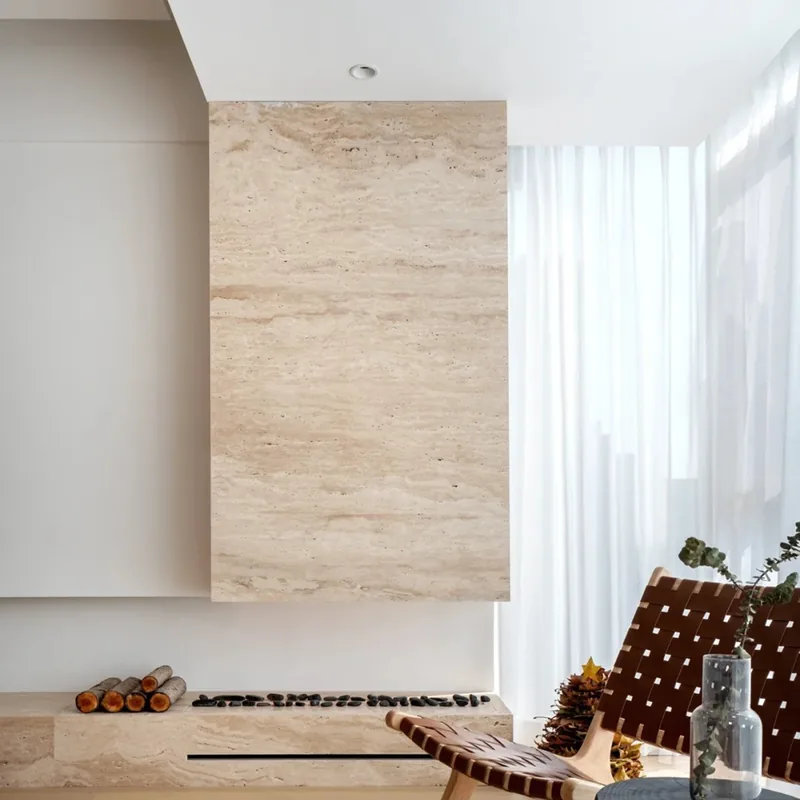 Beige travertine cladding - filled & honed, indoor wall
Travertine is a banded limestone deposited around springs, which is why it carries natural voids. Two decisions define the material you actually receive: the cutting direction and whether those voids are filled.
Vein cut vs cross cut
Vein cut slices along the bedding plane, exposing linear bands - a directional, architectural look. Cross cut goes across the bands, producing cloudier, more random movement that reads closer to a classic marble. Vein cut shows voids as long linear openings; cross cut scatters them as small holes. Same block, two different stones visually.
Filled, unfilled, and the honest middle ground
Filled travertine has voids filled with cement or resin ground flush - the default for interior floors and countertops because an unfilled floor traps dirt and grit and cycles fillers out under foot traffic. Unfilled keeps the open structure; it suits walls, facades and rustic interiors, and it is the honest choice for exterior cladding where movement and weathering are part of the look. For heavy-traffic commercial floors, filled and honed is the only specification we recommend.
Finishing pairs
Honed filled travertine is the workhorse - warm, even, low sheen. Polished cross cut works for feature panels. Brushed unfilled vein cut is the pool-deck and facade combination: open texture, slip resistance, and linear shadow lines that deepen with weathering.
What we confirm before cutting
Cutting direction, fill type, and - the one buyers forget - block selection for consistency. Travertine varies between quarry beds; we shoot a photo set of the actual block run against your approved sample and hold the REF number for the whole order.
Quick answers
Is unfilled travertine suitable for bathroom floors?
Not recommended. Open voids collect soap residue and hair and are unpleasant to maintain in wet areas. Use filled and honed; keep unfilled for walls if you want the raw look.
Does travertine filling fall out over time?
Cement-filled voids on a properly maintained interior floor stay put for years; loose grit and water intrusion are what pull fillers out. Outdoor unfilled avoids the problem by having no filler at all.
Which direction should travertine be cut for a feature wall?
Vein cut for directional, banded walls; cross cut for a softer cloudy field. Book-matched vein cut pairs are the strongest look on feature walls.
Planning a project?
Send your BOQ, drawing or a photo of the sample you are matching. We reply with a REF-numbered quotation, packing plan and current lead time - typically within one working day.